


Fashion & Apparel Franchise in India 2027
November 17, 2026
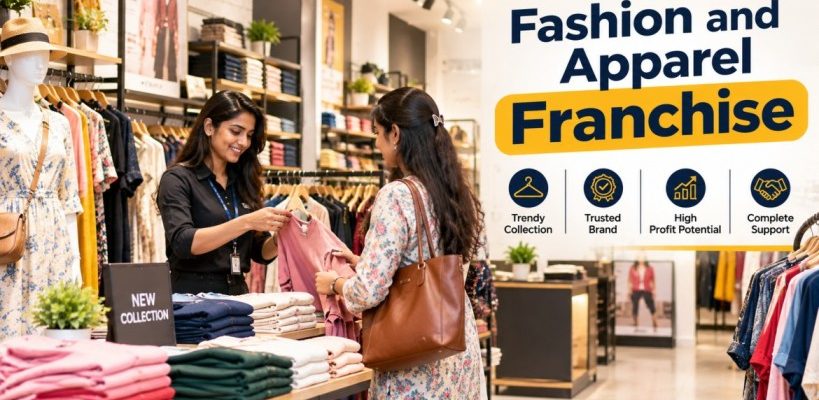
Fashion & Apparel Franchise in India 2027: Top Brands, Investment & ROI
A fashion franchise in India lets you run a branded apparel store using the company’s name, products, and systems — without building a brand from scratch. In 2027, the most realistic entry points sit between ₹6 lakh and ₹50 lakh, with payback periods of 1.3 to 3 years depending on the brand and city tier.
India’s organised apparel retail is growing at 10–13% annually, and women’s apparel alone is clocking 12–14% CAGR[reference:0]. That growth is no longer metro-only. Tier-2 and Tier-3 cities are where the next wave of branded fashion demand is coming from[reference:1].
Why this matters to you: If you have ₹2–₹25 lakh and want a business with brand pull, walk-in customers, and a proven operating system, apparel franchising is one of the few retail categories where you don’t start from zero.
What Is a Fashion Franchise and Why It Works in India
A fashion franchise is a partnership: you invest in the store, the brand gives you its name, supply chain, training, and marketing support. You sell their products and keep a margin. The brand expands without funding every store itself.
This model works in India for three reasons. First, branded fashion is still under-penetrated outside metros — Tier-2 and Tier-3 shoppers are moving away from unbranded local tailors toward known labels[reference:2]. Second, inventory turnover in apparel is fast, especially in ethnic and fusion wear where demand is occasion-driven, not trend-driven[reference:3]. Third, the brand absorbs most of the marketing and design risk, which matters when you’re a first-time business owner.
Why this matters to you: You’re not paying for a logo. You’re paying for a customer base that already trusts the name on the door.
Fashion Franchise Investment in India: Real Numbers for 2027
Fashion franchise costs in India range from under ₹5 lakh for boutique or kiosk formats to over ₹3 crore for large-format Tata-brand stores. Most practical entry points for a ₹2–₹25 lakh budget sit in the low and mid-range segments.
Here’s the investment table you should bookmark:
| Investment Tier | Typical Range (₹) | Store Size | Best For | Example Brands |
|---|---|---|---|---|
| Low investment | 2–10 lakh | 100–500 sq ft | First-time owners, kiosks, boutique formats | Jogur, Nine2Five, Spotdeer[reference:4] |
| Accessible / value | 6–18 lakh | 400–800 sq ft | Streetwear, youth fashion, compact stores | Trenzilla, Mufti[reference:5][reference:6] |
| Mid-range | 15–50 lakh | 500–1,200 sq ft | Ethnic wear, women’s fashion, Tier-2 cities | Juniper, Pan America, Manyavar[reference:7][reference:8][reference:9] |
| Premium / large format | 50 lakh–3 crore | 1,000–4,000+ sq ft | Metro malls, high-street retail, established investors | FabIndia, Westside, Louis Philippe[reference:10][reference:11][reference:12] |
Why this matters to you: Your budget decides your format. Don’t stretch into a premium brand if it leaves you with zero working capital — apparel needs cash for seasonal inventory.
Low-Investment Fashion Franchises (₹2–₹10 Lakh)
This tier is real, but it comes with trade-offs. You’ll likely get a smaller store, fewer SKUs, and less brand recall than a national label. Jogur Apparel operates in the ₹2–₹5 lakh range[reference:13]. Nine2Five Clothing sits at ₹5–₹10 lakh with a ₹2 lakh franchise fee[reference:14]. Trenzilla starts around ₹6 lakh for compact formats[reference:15].
These work best in Tier-2 and Tier-3 markets where rent is low and footfall is concentrated in one or two high streets.
Mid-Range Fashion Franchises (₹15–₹50 Lakh)
This is the sweet spot for most readers of this page. Juniper requires ₹30–₹50 lakh with 800–1,200 sq ft[reference:16]. Pan America sits at ₹30–35 lakh with a reported payback of about 1.3 years[reference:17]. Manyavar typically needs ₹30–₹50 lakh total investment[reference:18]. Mufti lands at ₹17–₹24 lakh[reference:19].
You get a recognisable brand, structured supply chain, and store-opening support — without committing crore-level capital.
Premium Fashion Franchises (₹50 Lakh–₹3 Crore)
FabIndia runs ₹60–70 lakh total investment including franchise fee[reference:20]. Westside ranges from ₹50 lakh to ₹3 crore depending on city and square footage, operating on a FOCO model where Trent manages day-to-day operations[reference:21][reference:22]. Louis Philippe starts around ₹1–1.5 crore[reference:23].
This tier is for investors with deep pockets and patience. Returns are steadier but the capital lock-in is heavy.
Top Fashion & Apparel Franchise Brands in India for 2027
The brands below are ranked by a mix of accessibility, franchise support, and 2027 expansion momentum — not by store count alone.
1. Juniper — Ethnic & Fusion Wear
Investment: ₹30–50 lakh. Space: 800–1,200 sq ft. Why it stands out: Backed by Aman Exports International, Juniper blends traditional craftsmanship with modern silhouettes and has a structured franchise model with strong backend manufacturing support[reference:24]. It performs well in malls and high streets across Tier-1 and Tier-2 cities.
2. Fashor — D2C-Backed Women’s Fashion
Investment: ₹50 lakh–₹1 crore. Space: 1,000–2,000 sq ft. Fashor built its customer base online before expanding offline, which means brand recall already exists when you open a store. Its product mix — kurtas, dresses, occasion wear — drives high inventory turnover[reference:25].
3. Trenzilla — Affordable Streetwear
Investment: ₹6–18 lakh. Trenzilla runs a sale-or-return inventory model, which means unsold stock can be returned — a major de-risking feature for first-time franchisees[reference:26]. It performs in metros and Tier-2/3 markets, with some outlets reporting ₹5–15 lakh monthly sales[reference:27].
4. Mufti — Menswear Value Fashion
Investment: ₹17–24 lakh, with a ₹2–₹4 lakh franchise fee and ₹15–₹20 lakh store investment[reference:28]. Mufti is a practical entry into menswear without the ₹50 lakh+ commitment of premium formal brands.
5. Manyavar — Ethnic Menswear
Investment: ₹30–50 lakh. Manyavar is the default choice for wedding and festive menswear, with strong brand pull and celebrity endorsement. It’s a seasonal business — October to February is peak — but average transaction values are high[reference:29][reference:30].
6. FabIndia — Sustainable Ethnic Retail
Investment: ₹60–70 lakh (₹15–20 lakh franchise fee + ₹40–50 lakh setup). FabIndia’s handcrafted, sustainable positioning gives it a loyal customer base that isn’t purely price-sensitive[reference:31][reference:32]. This is a Tier-1 and premium Tier-2 play.
7. Westside / Zudio — Tata-Backed Formats
Investment: ₹50 lakh–₹3 crore. Westside operates primarily on a FOCO model — you provide real estate and fit-out capital, Trent runs the store and gives you a pre-determined revenue share[reference:33]. It’s a hands-off investment, but the capital requirement is steep and site selection is controlled by the company.
8. Pan America — Fast-Payback Menswear
Investment: ₹30–35 lakh. Pan America is expanding through FOFO menswear franchises with a reported payback of nearly 1.3 years and an IRR of 121% in company-published figures[reference:34]. Treat brand-provided ROI claims as estimates and validate with store-level P&L data.
Why this matters to you: The “best” brand is the one whose investment size, store format, and city fit your actual budget and local market — not the one with the biggest name.
FOCO vs FOFO: Which Fashion Franchise Model Should You Choose?
FOCO means Franchise-Owned, Company-Operated. You invest in the store; the company runs daily operations. FOFO means Franchise-Owned, Franchise-Operated. You invest and you run the store yourself.
| Factor | FOCO | FOFO |
|---|---|---|
| Who operates the store | Brand’s team | You |
| Control over daily decisions | Low | High |
| Profit potential | Fixed revenue share | Higher upside, higher responsibility |
| Best for | Passive investors with capital | Hands-on owners building a business |
| Example | Westside[reference:35] | Juniper, Fashor, FabIndia |
Why this matters to you: If you want to learn retail and build operational equity, FOFO is the better teacher. If you have capital but no time, FOCO reduces your workload — at the cost of control.
Fashion Franchise ROI in India: What Returns Look Like
Fashion franchise ROI in India typically falls between 18% and 40% annually, with payback periods of 1.3 to 3 years depending on brand, city, and store size. These are industry estimates, not guarantees.
| Brand / Format | Investment | Reported Payback / ROI | Source Type |
|---|---|---|---|
| Pan America (FOFO) | ₹30–35 lakh | ~1.3 years payback; IRR 121% | Brand-reported[reference:36] |
| Zivame (intimate wear) | ₹25–40 lakh | 1.5–2 years | Industry estimate[reference:37] |
| Sabhyata (ethnic wear) | ₹30–40 lakh | 24–36 months; 30–40% annual ROI | Franchise portal estimate[reference:38] |
| House of Masaba | ₹18–30 lakh | 30–36 months; 12–18% net margin | Franchise portal estimate[reference:39] |
| Westside (FOCO) | ₹50 lakh–₹3 crore | ~18% annually | Financial portal estimate[reference:40] |
Why this matters to you: Payback under 2 years sounds great, but it depends on footfall, rent, and how much dead stock you’re holding. Always ask for same-city, same-format store data before signing.
Why Tier-2 and Tier-3 Cities Are the Real Opportunity
Tier-2 and Tier-3 cities are driving the next leg of branded apparel growth in India. Lower rents, lower staff costs, and rising disposable incomes mean a store that struggles in Mumbai can be profitable in Indore, Jaipur, Patna, or Nagpur.
Industry analysis shows Tier-2 and Tier-3 markets are becoming increasingly relevant to organised apparel retail because they offer lower setup and operating costs while providing access to growing consumer demand[reference:41]. Cities like Lucknow, Indore, Nagpur, and Bhubaneswar are specifically flagged as high-growth fashion consumption markets[reference:42]. Surat and Jaipur add a sourcing advantage because they’re textile hubs[reference:43].
Why this matters to you: A ₹20 lakh store in Indore can break even faster than a ₹50 lakh store in a Mumbai mall — because your fixed costs are half.
7-Point Checklist Before You Sign a Fashion Franchise Agreement
Use this checklist before transferring any money:
- ☐ Verify the brand’s actual store count and how many franchises have shut down in the last 2 years.
- ☐ Ask for unit-level P&L of 3 existing franchisees in cities similar to yours.
- ☐ Confirm who bears dead stock risk — you, the brand, or a sale-or-return arrangement.
- ☐ Read the royalty clause carefully: 5–10% royalty can push breakeven by 6+ months[reference:44].
- ☐ Check the minimum inventory purchase requirement per season.
- ☐ Confirm territory exclusivity — will the brand open another store 2 km from yours?
- ☐ Get the exit clause in writing: what happens if you want to close after 12 months?
Why this matters to you: The franchise agreement is the business. If you don’t understand a clause, pay a retail lawyer to explain it before you sign.
How to Start a Fashion Franchise in India (Step-by-Step)
- Fix your budget. Separate investment capital from working capital. Keep at least 20% aside for inventory and 3 months of rent.
- Choose your category. Ethnic wear, streetwear, menswear, women’s fusion, or value fashion. Each has different seasonality and margin structures.
- Shortlist 3 brands in your range. Use directories and brand websites. Compare investment, space, and royalty.
- Visit existing stores. Talk to franchisees without the brand’s sales team present.
- Scout your location. High street or mall? Footfall matters more than square footage.
- Negotiate terms. Franchise fee, royalty, territory, and inventory commitment are all negotiable to varying degrees.
- Sign, set up, and train. Most brands provide store setup support and staff training. Use it.
Why this matters to you: Skipping step 4 — talking to existing franchisees — is the single most common reason first-time owners pick the wrong brand.
Common Mistakes First-Time Fashion Franchise Owners Make
Mistake 1: Spending the entire budget on setup. A beautiful store with no inventory budget is a showroom, not a business.
Mistake 2: Ignoring seasonality. Ethnic wear peaks during weddings and festivals. Streetwear is more year-round. Match the brand to your city’s buying calendar.
Mistake 3: Choosing a brand you personally like, not one your city needs. Your taste is not the market’s taste. Check what people in your target area already buy.
Mistake 4: Underestimating royalty’s impact. A 7% royalty on ₹1 crore annual revenue is ₹7 lakh straight off your profit. Model it before you commit.
Most franchise failures are cash-flow failures, not brand failures. Protect your working capital.
Final Word: Pick the Brand That Fits Your City, Not Your Ego
India’s fashion franchise market in 2027 is broad enough for a ₹5 lakh kiosk and a ₹3 crore Tata store to coexist. The right choice depends on your capital, your city’s buying behaviour, and how hands-on you want to be.
Start with the investment table, shortlist three brands, and talk to existing franchisees before you sign anything. That one step will save you more money than any negotiation.