

Dental Clinic Franchise in India: The Growing Opportunity
November 5, 2026
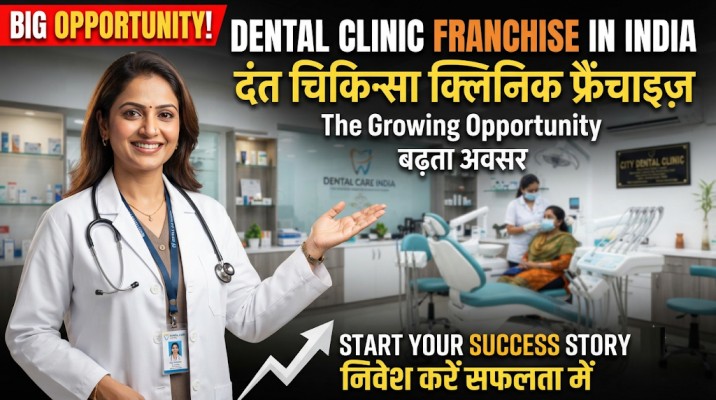
Dental Clinic Franchise in India: The Growing Opportunity (2026 Guide)
A dental clinic franchise in India can be started with ₹5–13 lakh for an asset-light, dentist-operated model, or ₹30–60 lakh for a full FOFO/FICO clinic in a Tier-2 city. India’s dental care market is growing at over 9% annually through 2030, and organised chains still hold a small share of a market dominated by single-doctor clinics.
Dental care is not discretionary. Patients delay a new phone before they delay a broken tooth. That is why dental franchises have become one of the most resilient healthcare categories in the country. This guide breaks down the real investment, margins, top brands, and the Tier-2 city opportunity — without the brochure hype.
One-Line Answer: What Does a Dental Clinic Franchise Cost?
Asset-light, dentist-operated model: ₹5–13 lakh CAPEX with zero franchise fee (e.g., Eka Dental Care). Best for practising BDS/MDS dentists who want ownership without business management.
Mid-tier FOFO clinic: ₹30–60 lakh total investment for a Tier-2 city clinic (e.g., Dental Care Centre, Sabka Dentist).
Premium FOCO/FICO clinic: ₹55 lakh–₹2.5 crore for metro flagships and clear-aligner formats (e.g., Toothsi by MakeO, Dr. Toothlittle).
Why this matters to you: The ₹5 lakh entry and the ₹60 lakh flagship are not the same business. The first is a clinical practice with a brand system. The second is a real-estate-and-equipment-heavy healthcare asset. Choose the model before you choose the brand.
Why Dental Is India’s Most Resilient Healthcare Franchise
9%+ Annual Market Growth Through 2030
India’s dental care market is projected to grow at a compound annual rate of over 9% through 2030, among the faster-growing segments in Indian healthcare. Rising oral health awareness, increasing disposable income, dental tourism, and demand from Tier-2 and Tier-3 cities are all driving the shift from unorganised single-chair clinics to branded, standardised chains.
Essential, Not Discretionary
Patients delay other purchases before they delay a broken tooth or gum infection. This keeps demand stable through economic cycles. Cleanings, root canals, implants, and cosmetic treatments bring people back repeatedly, creating predictable revenue rather than seasonal spikes.
Organised Care Is Still Underpenetrated
Most Indian cities are still dominated by independent, single-doctor clinics. Nationally recognised, standardised multi-specialty dental networks remain limited. Clove Dental, the largest organised player, operates around 715 clinics across 26 cities — a large number in absolute terms, but a small share of a market with hundreds of thousands of standalone clinics. That gap is the franchise opportunity.
Why this matters to you: You are not entering a saturated category. You are entering a market where brand trust is shifting from “my neighbourhood dentist” to “a clinic chain I can rely on.”
The Two Franchise Models: FOFO vs. FICO
FOFO (Franchise Owned, Franchise Operated)
You invest in the clinic and run daily operations. The brand provides systems, training, marketing support, clinical SOPs, and centralised procurement. A practising dental registration is usually required to hold the clinic licence. This is the model for dentists who want ownership and clinical control.
FICO (Franchise Invested, Company Operated)
You own the asset and the licence, but the company runs day-to-day operations — staffing, clinical management, patient flow, and marketing. No dental degree is required. This is the model for investors who want returns without operational involvement.
Comparison Table: Control, Involvement, Returns
| Factor | FOFO | FICO |
|---|---|---|
| Who runs the clinic | You (the franchisee) | The company |
| Dental degree required | Yes (practising BDS/MDS registration) | No |
| Control over operations | High | Low (company-managed) |
| Best for | Practising dentists, clinic owners | Investors, NRIs, family offices |
| Typical model example | Radiant Dental Care FOFO, Sabka Dentist | Toothsi by MakeO FICO, Eka Dental Care |
Sources: Radiant Dental Care (2026), Toothsi by MakeO (Oct 2026), Eka Dental Care (Dec 2025).
Why this matters to you: If you are a dentist, FOFO gives you clinical control and brand support. If you are an investor without a dental degree, FICO is the only legally viable path to owning a dental clinic.
The Real Investment: Where Your ₹5–₹60 Lakh Goes
Tier-1 City (Lucknow, Indore, Jaipur): ₹40–60 lakh
A 800–1,200 sq ft clinic with 2–3 dental chairs in a Tier-2 city costs ₹40–60 lakh. The breakdown typically includes interiors, dental chairs, sterilisation, imaging (CBCT and intra-oral scanner), initial inventory, brand fee, and three months of working capital. Mature monthly revenue: ₹6–9 lakh. Break-even: 18–22 months. Royalty: 6% of revenue.
Tier-2 City Outskirts: ₹70 lakh–₹1 crore
A 1,200–1,800 sq ft clinic with 3–4 chairs in a metro satellite or Tier-1 city outskirts costs ₹70 lakh–₹1 crore. Mature monthly revenue: ₹10–14 lakh. Break-even: 20–26 months. Owner take-home after stabilisation: ₹3–6 lakh per month.
Metro Flagship: ₹1.2–2.5 crore
A 2,000–3,500 sq ft flagship with 4–6 chairs and specialty rooms in South Delhi, Bandra, or Indiranagar costs ₹1.2–2.5 crore. Mature monthly revenue: ₹18–30 lakh. Break-even: 24–30 months.
Investment Breakdown Table (Tier-2 City Example)
| Cost Component | Estimated Amount (₹) |
|---|---|
| Interiors + dental chairs + sterilisation | ₹38–50 lakh |
| Imaging (CBCT + intra-oral scanner) | ₹15–22 lakh |
| Initial inventory + consumables | ₹4–6 lakh |
| Brand fee + onboarding | ₹8–12 lakh |
| Working capital (3 months runway) | ₹6–10 lakh |
| Total | ₹70 lakh–₹1 crore |
Source: Dental Care Centre franchise disclosure (2026). Figures are for a 1,200–1,800 sq ft clinic with 3–4 chairs in a metro satellite or Tier-1 city outskirts.
Why this matters to you: The ₹5 lakh model and the ₹60 lakh model are different businesses. If your budget is ₹2–25 lakh, the asset-light dentist-operated model or a smaller FOFO format is the realistic entry point. If you have ₹40 lakh+, a full clinic in a Tier-2 city is viable.
Profit Margins and Owner Take-Home
30–40% Net Margin for Well-Managed Clinics
Well-managed dental clinics in India typically retain 30–40% of revenue as profit**, according to industry benchmarks. A listed dental chain (Alliance Dental Care / Apollo Dental) reported an operating margin of **20.5% in FY2025, moderating from 22.9% in FY2024 due to consumable costs and doctors’ fees. Individual franchisee-owned clinics can run leaner or fatter depending on rent, staff costs, and treatment mix.
Owner Take-Home: ₹3–6 Lakh/Month in Tier-2
A mature Tier-2 clinic (month 18+) with ₹10–14 lakh monthly revenue, ₹5–7 lakh operating costs, and ₹0.6–0.85 lakh in royalty and marketing fees leaves the owner with **₹3–6 lakh per month** in take-home. Year one is investment and stabilisation, not income.
The Royalty and Marketing Fee Impact
Dental franchise royalties commonly range from **6% of revenue** (Dental Care Centre) to **10–20% of monthly revenue** or a fixed profit-sharing split (80-20/90-10). On ₹1 crore annual turnover, a 6% royalty is ₹6 lakh per year. On ₹50 lakh turnover, a 5% royalty is ₹2.5 lakh per year. These are real costs that reduce owner take-home.
Why this matters to you: A 30–40% net margin sounds strong, but royalty, rent, and equipment financing come out first. Plan your personal income around owner take-home, not gross revenue.
Top Dental Clinic Franchise Brands in India (2026)
Clove Dental
India’s largest organised dental chain, with around 715 clinics across 26 cities and more than $215 million (₹1,700 crore) raised. Clove is primarily company-operated, not a traditional franchise, but it sets the benchmark for standardised, dentist-first clinics. Average investment per clinic is around ₹40 lakh**.
Sabka Dentist
A franchise chain with 120 outlets**, entry investment of **₹30 lakh**, and **0% royalty. Smaller footprint (600 sq ft) than U.S.Pizza (1,000 sq ft) and a bigger network. The lower entry capex makes it a popular first-time dental franchise choice.
Apollo Dental
The dental arm of Apollo Hospitals, with 75+ centres across 19 cities**. Franchisees benefit from the Apollo brand trust, integrated outpatient model, and “owner” positioning. Investment is in the mid-to-high band, and the brand is expanding through franchise partnerships.
Toothsi by MakeO
A technology-led clear-aligner and dental aesthetics platform offering a **FICO model**: ₹55 lakh total investment, 800–1,000 sq ft, 10% revenue share until capex is recouped then 5%, projected 16% IRR, and 25-month payback. Target markets include Delhi NCR, Mumbai, Bengaluru, Hyderabad, and Tier-2 cities like Jaipur and Lucknow.
Dr. Toothlittle
India’s first dedicated pediatric dental clinic chain. Investment: ₹50 lakh–₹1 crore. Franchise fee: ₹50 lakh. Royalty: 0%. Exclusive territorial rights. Payback: 2–3 years. 1,000 sq ft requirement. Best for entrepreneurs who want a specialised, child-focused format.
The Little Dentist
A pediatric dental franchise with a much lower entry: ₹5–10 lakh investment**, ₹4 lakh franchise fee, **25% royalty**, and **1–2 year payback**. 8-year term. Best for dentists who want a low-capex, pediatric-focused practice.
Eka Dental Care
An asset-light, dentist-operated model with **one-time CAPEX of ₹5–13 lakh and zero franchise fee**. Eka covers rent, staff salaries, utilities, marketing, and clinic management. The dentist focuses on clinical work. Assured earnings start at ₹40,000/month, scaling to ₹3 lakh/month. Best for practising BDS/MDS dentists who want ownership without business stress.
Brand Comparison Table
| Brand | Investment | Model | Royalty | Best For |
|---|---|---|---|---|
| Sabka Dentist | ₹30 lakh | FOFO | 0% | Lowest full-clinic entry |
| Eka Dental Care | ₹5–13 lakh | Dentist-operated | 0% franchise fee | Practising dentists, low capex |
| The Little Dentist | ₹5–10 lakh | FOFO | 25% | Pediatric focus, low entry |
| Apollo Dental | Mid–high band | Franchise | Varies | Brand trust, hospital backing |
| Toothsi by MakeO | ₹55 lakh | FICO | 10% → 5% | Hands-off investors, aligners |
| Dr. Toothlittle | ₹50 lakh–₹1 crore | FOFO/FOCO | 0% | Pediatric specialty, exclusive territory |
Sources: Franticc (Oct 2026), Eka Dental Care (Dec 2025), Franchise India (2026), Indian Retailer (Oct 2026). Figures are estimates and vary by city, format, and agreement terms.
Tier-2 City Opportunity: Why Indore, Jaipur, and Patna Work
Lower Rent, Lower Competition, Growing Demand
Tier-2 cities offer a structural advantage for dental franchises. Rent is 40–60% lower than metros, which compresses the break-even timeline. Competition from organised chains is lower, while demand is rising as oral health awareness spreads beyond big cities. Toothsi by MakeO has explicitly named Jaipur, Lucknow, Chandigarh, Nagpur, and Guwahati as target markets. Dental Care Centre’s Tier-2 clinic format is priced at ₹40–60 lakh with a mature monthly revenue of ₹6–9 lakh and 18–22 month break-even.
The ₹40–60 Lakh Sweet Spot
A ₹40–60 lakh clinic in Indore or Jaipur with 2–3 chairs is the realistic entry point for a full FOFO dental franchise. At ₹6–9 lakh mature monthly revenue and a 30–40% net margin, the owner can expect ₹2–3.6 lakh monthly profit after stabilisation, with break-even in 18–22 months.
Why this matters to you: In Tier-2 cities, a dental franchise can break even in 18–22 months because rent and staff costs are lower. The same investment in a metro buys more competition and higher fixed costs.
7-Point Checklist Before Choosing a Dental Franchise
- Is this a FOFO model (I run it) or a FICO model (company runs it)?
- Do I have a practising BDS/MDS registration, or do I need a FICO model?
- What is the total investment including working capital, not just the franchise fee?
- What is the royalty percentage, and does it apply to gross or net revenue?
- Have I spoken to 3 existing franchisees about actual patient footfall and owner take-home?
- Is the territory exclusive, and is it written into the agreement?
- Do I have 3–6 months of working capital beyond the setup cost?
If the answer to questions 1, 4, or 5 is unclear, do not sign yet.
Final Verdict
If you are a practising dentist with ₹5–13 lakh: An asset-light, dentist-operated model (Eka Dental Care) is the lowest-risk entry. You own the clinic, focus on clinical work, and avoid business management stress.
If you are a dentist with ₹30–60 lakh: A FOFO clinic in a Tier-2 city (Sabka Dentist, Dental Care Centre) offers the best balance of ownership, brand support, and owner take-home.
If you are an investor without a dental degree: A FICO model (Toothsi by MakeO) is the only legally viable path. Understand that you are investing in a managed asset, not running a clinic.
If you want a pediatric specialty: Dr. Toothlittle (premium, 0% royalty) or The Little Dentist (low entry, 25% royalty) are the two ends of the spectrum.
See verified dental clinic franchise options:
View franchise list on free-franchise.com →
Frequently Asked Questions (FAQ)
How much does a dental clinic franchise cost in India?
It ranges from ₹5–13 lakh for an asset-light, dentist-operated model to ₹30–60 lakh for a Tier-2 city FOFO clinic, and ₹55 lakh–₹2.5 crore for metro flagships and FICO formats. Investment typically ranges from ₹15 lakh to ₹1.2 crore, depending on city tier, brand, clinic size, and number of chairs.
Do I need a BDS degree to open a dental clinic franchise?
Yes, for FOFO models. Practising or supervising clinical work legally requires a BDS or MDS degree registered with the Dental Council. Non-dentist investors can own franchises under FICO models (Franchise Invested, Company Operated), where the company handles clinical operations.
What is the difference between FOFO and FICO in dental franchising?
FOFO means Franchise Owned, Franchise Operated — you invest and run daily operations, and the brand provides systems, training, and marketing. FICO means Franchise Invested, Company Operated — you own the asset, but the company runs the clinic, and no dental degree is required.
What is the profit margin in a dental clinic franchise?
Well-managed dental clinics in India typically retain 30–40% of revenue as profit. After royalty (6–10%), rent, staff, and equipment financing, owner take-home in a mature Tier-2 clinic is ₹3–6 lakh per month. Year one is investment and stabilisation.
Is a dental clinic franchise profitable in Tier-2 cities?
Yes. Tier-2 cities like Indore, Jaipur, and Patna have lower rent, lower competition, and growing demand. A ₹40–60 lakh clinic with 2–3 chairs can generate ₹6–9 lakh mature monthly revenue with an 18–22 month break-even, leaving ₹2–3.6 lakh monthly profit after stabilisation.
Which are the top dental clinic franchise brands in India?
Key brands include Clove Dental (715+ clinics, company-operated), Sabka Dentist (₹30 lakh entry, 0% royalty), Apollo Dental (75+ centres), Toothsi by MakeO (₹55 lakh FICO), Dr. Toothlittle (pediatric, ₹50 lakh–₹1 crore), The Little Dentist (₹5–10 lakh, 25% royalty), and Eka Dental Care (₹5–13 lakh, zero franchise fee).