

Senior Care Service Franchise in India
November 12, 2026
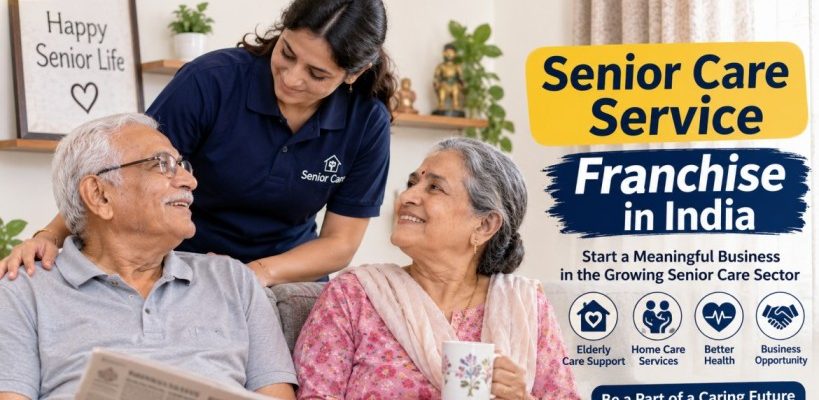
Senior Care Service Franchise in India: The Hot Category of 2027
A senior care service franchise in India can be started with ₹2–5 lakh for a coordination or service-hub model, or ₹5–10 lakh for a branded home care franchise. India’s senior care market is projected to reach $50 billion by 2030 — a massive 300% growth from current levels — and the elderly population is expected to reach 347 million by 2050, meaning one in every five Indians will be a senior citizen [reference:0].
This is not a prediction. It is arithmetic on India’s ageing population. Nuclear family structures, rising life expectancy, and adult children living in different cities from ageing parents have made elder care one of the fastest-growing categories of franchise inquiry in the country [reference:1]. Yet organised supply is still tiny. Brands like Maity’s (₹2–5 lakh), Emoha (₹5–10 lakh), and Life Circle (₹5–10 lakh) offer franchise models that fit a ₹2–30 lakh budget. This guide breaks down the real costs, margins, and brands.
One-Line Answer: Why Senior Care Is a Hot Franchise Category
The $50 billion market by 2030: India’s senior care sector is projected to reach $50 billion by 2030**, driven by a **300% growth** from current levels [reference:2]. The urban senior citizen population alone is about 1.4 crore**, and this number is expected to triple by 2050 [reference:3].
The nuclear family and migration effect: Adult children are increasingly living in different cities from their ageing parents. They need a trusted local provider who can check in on their parents, coordinate medical care, and handle emergencies. A branded senior care franchise fills that gap — and earns a recurring monthly fee for doing so.
Why this matters to you: A restaurant sells a meal once. A senior care franchise sells a service that families need every month, every quarter, and every year. That is the structural advantage of the recurring model in this category.
The Market Opportunity: A Demographic Shift You Cannot Ignore
India’s Elderly Population: 347 Million by 2050
By 2050, India’s elderly population is projected to reach 347 million**, meaning **1 in every 5 Indians** will be a senior citizen [reference:4]. The current urban senior citizen population of about 1.4 crore** is expected to triple by 2050 [reference:5]. This is a structural demographic shift, not a temporary trend — and it guarantees long-term demand for senior care services.
The $50 Billion Senior Care Market by 2030
The senior care sector in India is projected to reach $50 billion by 2030** — a **300% growth** from current levels [reference:6]. Senior spending is estimated at around ₹8,500 per month** on health and daily needs, creating a large and recurring revenue pool for service providers [reference:7].
Why Organised Supply Is Still Tiny
Despite the market size, organised senior care is still in its early stages. Most care is provided by unorganised local attendants, nursing bureaus, and family members. There is no national brand that a worried adult child in Mumbai can call for their parent in Patna. This fragmentation is the franchise opportunity: organised brands bringing verified caregivers, care protocols, technology, and accountability to a market that currently runs on trust and word-of-mouth [reference:8].
Why this matters to you: You are not entering a saturated market. You are entering a market where the organised share is still small and growing — especially in Tier-2 cities.
Why Recurring Revenue Changes the Franchise Maths
Monthly Home Care Subscriptions vs One-Time Services
A one-time home visit generates revenue once. But home care subscriptions generate monthly recurring revenue**. Emoha, for example, prices home care subscriptions from ₹107 to ₹9,999 a month** depending on the service level [reference:9]. A franchisee with 30–50 active subscriptions has a predictable monthly income base that does not require constant new sales.
The Caregiver Roster Model
Life Circle Health Services operates as a coordination hub** for care that happens in clients’ homes. The franchisee manages a roster of trained caregivers, matches them to client needs, and handles scheduling, quality checks, and escalations. What brings the family back repeatedly is not a single service but **consistency of care over months or years** — needs like mobility support, vitals monitoring, or medication management rarely resolve after one visit [reference:10].
The Trust Compound Effect
Senior care is a relationship-driven business**, not a transaction-driven one. A centre in this category earns trust slowly, through reliability shown week after week [reference:11]. That trust compounds: a family that is satisfied with a caregiver for three months is likely to stay for three years. The franchisee who builds a reputation for reliable, compassionate care creates a moat that a new competitor cannot easily replicate.
Why this matters to you: The difference between a franchise that pays you once and a franchise that pays you every month is the client mix. Prioritise recurring care subscriptions from day one.
The Three Senior Care Franchise Models Under ₹30 Lakh
Coordination / Service Hub Model (₹2–5 Lakh)
The lowest-investment entry. You operate a small office (100–150 sq ft) and focus on caregiver recruitment, client coordination, and service management**. Maity’S** operates at **₹2–5 lakh** with a **₹36,000 franchise fee**, a **100–150 sq ft** space requirement, and a **1–2 year payback**. The franchisee manages local elder care operations, recruits caregivers, and ensures service delivery aligns with individualised care plans [reference:12][reference:13]. Best for first-timers who want a low-risk, coordination-focused model.
Mid-Tier Home Care Franchise (₹5–10 Lakh)
You manage a local team of caregivers and nurses, handle client onboarding, and deliver Emoha-branded or Life Circle-branded services. Emoha Elder Care** operates at **₹5–10 lakh** with a **₹5,00,000 franchise fee** and **5% royalty**. Space: **200–1,000 sq ft**. Revenue comes from in-home care, healthcare coordination, wellness programmes, and consulting [reference:14]. Life Circle Health Services** operates at **₹5–10 lakh** with a **501–1,000 sq ft** space and a **2–3 year payback** [reference:15]. Best for operators who want a proven brand with a multi-service portfolio.
Full-Service Elder Care Centre (₹15–30 Lakh)
A larger-format centre with a broader service portfolio, more staff, and possibly assisted living or specialised care. Yodda Elder Care** (headquartered in Pune, franchising since 2024) operates at **₹20–30 lakh** for a **500–1,200 sq ft** space. It is positioned as a premium elder care brand [reference:16]. **Jagruti Rehabilitation Centre** has proposed a franchise-owned, company-operated model with an indicative investment of **₹1.5–2 crore per centre** — outside the ₹30 lakh budget [reference:17]. Best for experienced operators who want a full-scale elder care facility.
Comparison Table: Investment, Space, Payback
| Model | Investment | Space | Payback | Best For |
|---|---|---|---|---|
| Coordination / Service Hub | ₹2–5 lakh | 100–150 sq ft | 1–2 years | First-timers, Tier-2 cities |
| Mid-Tier Home Care | ₹5–10 lakh | 200–1,000 sq ft | 2–3 years | Proven brand, multi-service |
| Full-Service Care Centre | ₹15–30 lakh | 500–1,200 sq ft | 2–3 years | Experienced operators |
Sources: Maity’s / ForeFind (2026), Emoha / ForeFind (2026), Life Circle / ForeFind (2026), Yodda / FranchiseIndia (2026). Figures are estimates and vary by city, brand, and format.
The Real Investment: Where Your ₹2–30 Lakh Goes
Franchise Fee, Setup, Caregiver Recruitment, Working Capital
| Cost Component | Maity’s (₹) | Emoha (₹) | Yodda (₹) |
|---|---|---|---|
| Franchise fee | ₹36,000 | ₹5,00,000 | Included |
| Office setup / infrastructure | ₹50,000–₹1,00,000 | ₹1,00,000–₹2,00,000 | ₹5,00,000–₹10,00,000 |
| Caregiver recruitment & training | ₹30,000–₹60,000 | ₹50,000–₹1,00,000 | ₹2,00,000–₹4,00,000 |
| Working capital (2–3 months) | ₹50,000–₹1,00,000 | ₹1,00,000–₹2,00,000 | ₹3,00,000–₹6,00,000 |
| Total | ₹2–5 lakh | ₹5–10 lakh | ₹20–30 lakh |
Sources: Maity’s / ForeFind (2026), Emoha / ForeFind (2026), Yodda / FranchiseIndia (2026). Figures are estimates and vary by city and agreement.
Why this matters to you: The franchise fee is only 10–50% of the total cost. Caregiver recruitment and working capital make up the rest. A ₹36,000 franchise fee with no working capital buffer is not a ₹36,000 business — it is a ₹2–3 lakh business waiting to run out of cash.
Profit Margins and ROI: The Real Numbers
1–2 Year Payback for Maity’s
Maity’S reports an expected payback period of 1–2 years**, depending on client acquisition rates and service adoption [reference:18]. The low capex and recurring home care contracts make this one of the faster payback models in the senior care category.
2–3 Year Payback for Life Circle
Life Circle Health Services reports a payback period of 2–3 years** for its ₹5–10 lakh model [reference:19]. The higher capex for a larger space and a broader service portfolio extends the payback, but the multi-service revenue streams (home care, nursing, wellness) create a higher long-term income ceiling.
Monthly Profit Scenarios Table
| Format | Monthly Revenue (Est.) | Net Margin | Monthly Net Profit (Est.) |
|---|---|---|---|
| Coordination / Service Hub | ₹50,000–₹1,00,000 | 25–35% | ₹15,000–₹35,000 |
| Mid-Tier Home Care | ₹1–2 lakh | 20–30% | ₹20,000–₹60,000 |
| Full-Service Care Centre | ₹2–4 lakh | 20–30% | ₹40,000–₹1.2 lakh |
Sources: Industry estimates based on Maity’s / ForeFind (2026), Emoha / ForeFind (2026), and Life Circle / ForeFind (2026). Figures assume controlled overhead and a recurring care subscription base.
Why this matters to you: A ₹2 lakh Maity’s hub at ₹75,000 monthly revenue and 30% net margin can earn ₹22,500 per month. A ₹7 lakh Emoha franchise at ₹1.5 lakh revenue and 25% margin can earn ₹37,500 per month. The higher investment buys a higher income ceiling.
Top Senior Care Franchise Brands in India (2027)
Maity’S (₹2–5 Lakh)
An elder care services provider (founded 2003, franchising since 2024) offering home-based medical assistance, nursing, daily living support, and emotional wellness programmes. Investment: ₹2–5 lakh**. Franchise fee: **₹36,000**. Space: **100–150 sq ft**. Payback: **1–2 years**. Best for: first-time operators who want the lowest entry point with a proven elder care model [reference:20].
ELDMaite (₹3 Lakh Franchise Fee, FOCO Model)
A structured elder care franchise with a ₹3 lakh franchise fee** and a **FOCO (Franchise Owned, Company Operated) model**. The fee is fully redeemable against milestones within 36 months, with a 100% refund guarantee if milestones are not met. Zero royalty, **50/50 revenue share**, and the company covers 50% of staff costs. Best for: investors who want brand ownership without operational involvement [reference:21].
Emoha Elder Care (₹5–10 Lakh)
A service-based elder care brand (founded 2018, franchising since 2021) providing personalised care solutions for senior citizens. Investment: ₹5–10 lakh**. Franchise fee: **₹5,00,000**. Royalty: **5%**. Space: **200–1,000 sq ft**. Services include in-home elder care, wellness programmes, healthcare coordination, and community engagement [reference:22]. Best for: operators who want a tech-enabled, multi-service home care model.
Life Circle Health Services (₹5–10 Lakh)
A senior and home-based wellness support franchise (7 years in franchising) with 6–10 outlets**. Investment: **₹5–10 lakh**. Space: **501–1,000 sq ft**. Payback: **2–3 years**. The centre functions as a coordination hub for caregiver assignments, client scheduling, and quality checks [reference:23]. Best for: operators who want a relationship-driven, recurring-care business.
Umang Living (Low Investment)
A multi-city senior care community franchise offering health, travel, legal, finance, and assisted services. The model promises earning from day one**, **low investment with high returns**, **exclusive territory rights**, and **zero operational hassle** — all backend operations are managed by Umang Living [reference:24]. Best for: operators who want a low-effort, brand-supported senior care business.
Yodda Elder Care (₹20–30 Lakh)
A premium elder care brand headquartered in Pune (franchising since 2024). Investment: ₹20–30 lakh**. Space: **500–1,200 sq ft**[reference:25]. Best for: operators who want a full-service, premium elder care centre.
Brand Comparison Table
| Brand | Investment | Franchise Fee | Royalty | Payback |
|---|---|---|---|---|
| Maity’S | ₹2–5 lakh | ₹36,000 | Not specified | 1–2 years |
| ELDMaite | ₹3 lakh fee | ₹3,00,000 | 0% (50/50 share) | 36 months (milestone-linked) |
| Emoha | ₹5–10 lakh | ₹5,00,000 | 5% | Not specified |
| Life Circle | ₹5–10 lakh | Not disclosed | Not disclosed | 2–3 years |
| Yodda | ₹20–30 lakh | Included | Not disclosed | Not disclosed |
Sources: ForeFind (2026), FranchiseIndia (2026), ELDMaite (2026). Figures are estimates and vary by city and agreement.
What ₹2 Lakh Cannot Buy: The Full-Care Reality
Yodda Elder Care (₹20–30 Lakh)
Yodda Elder Care operates at ₹20–30 lakh** for a **500–1,200 sq ft** premium elder care centre [reference:26]. The ₹2 lakh budget cannot cover this format. But the ₹2–5 lakh coordination model lets you learn the business — caregiver recruitment, client onboarding, quality checks — before committing ₹20 lakh.
Jagruti Rehabilitation (₹1.5–2 Crore)
Jagruti Rehabilitation Centre has proposed a franchise-owned, company-operated model with an indicative investment of ₹1.5–2 crore per centre** for mental health, addiction treatment, and elderly care services [reference:27]. This is a large-format, high-investment model outside the ₹30 lakh budget.
Why the Coordination Model Is the Smarter First Step
A ₹2–5 lakh coordination franchise lets you learn the business without committing ₹20 lakh. If the service hub works, you can upgrade to a larger centre later using accumulated profits. If it does not, the loss is manageable. Starting with a full-care centre on a ₹2 lakh budget is not possible without underfunding the business.
Why this matters to you: The ₹2 lakh budget is a learning budget. It buys a service hub, not a care facility. Treat it as your entry into the senior care business, not your final destination.
Tier-2 City Advantage: Why Indore, Jaipur, and Patna Work
Lower Rent, Lower Competition, Adult Children Living Away
The senior care opportunity is not limited to metros. Tier-2 and Tier-3 cities are expected to drive an increasing share of India’s franchise growth through 2030, as rising disposable income and reduced market saturation create meaningful opportunity [reference:28]. Adult children working in Mumbai or Bangalore often have parents living in Indore, Jaipur, or Patna — and they need a trusted local provider to check in, coordinate medical care, and handle emergencies.
A 100–200 sq ft coordination hub in Indore or Jaipur costs ₹8,000–₹20,000 per month** in rent, versus ₹30,000–₹60,000+ in a metro. A Maity’s or Emoha franchise in a Tier-2 city can generate **₹50,000–₹1 lakh in monthly revenue** within 6–9 months if the location has steady demand from adult children of ageing parents, generating **₹15,000–₹35,000 in monthly net profit** at a 25–35% net margin.
Why this matters to you: The same ₹2–5 lakh that barely covers a metro deposit can fund a complete service hub with working capital in a Tier-2 city. Lower rent means faster break-even and higher net margin on the same revenue.
7-Point Checklist Before Choosing a Senior Care Franchise
- Does the all-in investment fit my budget, or am I stretching to the last rupee?
- Is the format a coordination hub, mid-tier home care, or full care centre? Does it match my location and skills?
- What is the exact royalty — 0%, 5%, or a revenue share? Does it apply to gross or net revenue?
- Does the franchisor provide caregiver training, recruitment support, and care protocols?
- Have I budgeted ₹50,000–₹2 lakh for working capital and 2–3 months of operating costs?
- Have I spoken to 3 existing franchisees about actual monthly revenue and net profit?
- Is the territory protected in writing, and are the caregivers police-verified and insured?
If the answer to questions 1, 3, or 5 is unclear, do not sign yet.
Final Verdict
If your budget is ₹2–5 lakh: Maity’S is the realistic entry point. Lowest capital, ₹36,000 franchise fee, 1–2 year payback, and a proven elder care model. Best for first-time operators in Tier-2 cities.
If your budget is ₹5–10 lakh: Emoha or Life Circle offer a mid-tier home care franchise with a 5% royalty and a 2–3 year payback. Best for operators who want a tech-enabled, multi-service home care model.
If you want a FOCO model with brand ownership: ELDMaite offers a ₹3 lakh franchise fee with zero royalty, 50/50 revenue share, and full operational management by the company. Best for investors who want brand ownership without daily operations.
If your budget is ₹20–30 lakh: Yodda Elder Care offers a premium full-service centre with a 500–1,200 sq ft space. Best for experienced operators who want a high-end elder care brand.
See verified senior care franchise options:
View senior care franchise list on free-franchise.com →
Or fill this 2-minute form and get 5 franchise options with full cost and margin breakdowns for your city.
Frequently Asked Questions (FAQ)
What is the best senior care franchise for a ₹2 lakh budget?
Maity’S starts at ₹2–5 lakh with a ₹36,000 franchise fee and a 1–2 year payback. It offers home-based medical assistance, nursing, daily living support, and emotional wellness programmes. It is the lowest-investment branded entry into the senior care category.
How much does a senior care franchise cost in India?
It ranges from ₹2–5 lakh (Maity’S) to ₹5–10 lakh (Emoha, Life Circle), ₹20–30 lakh (Yodda Elder Care), and ₹1.5–2 crore (Jagruti Rehabilitation). The all-in cost includes the franchise fee, office setup, caregiver recruitment, and working capital.
What is the profit margin in a senior care franchise?
Coordination hubs run at 25–35% net margins. Mid-tier home care franchises run at 20–30%. Full-service care centres run at 20–30%. Maity’S reports a 1–2 year payback. Life Circle reports a 2–3 year payback. The margin depends on the format and client mix.
How long does it take to break even in a senior care franchise?
Coordination models break even in 1–2 years. Mid-tier home care franchises take 2–3 years. Full-service care centres take 2–3 years. Maity’S reports 1–2 years. Life Circle reports 2–3 years. The fastest paybacks are in the lower-capex coordination models.
Is a senior care franchise profitable in Tier-2 cities?
Yes. Tier-2 cities like Indore, Jaipur, and Patna have lower rent, lower competition, and a growing population of ageing parents whose adult children live in metros. A 100–200 sq ft coordination hub can break even in 1–2 years and generate ₹15,000–₹35,000 in monthly net profit.
What is the difference between a coordination hub and a full-service care centre?
A coordination hub (₹2–5 lakh) is a small office that recruits caregivers, matches them to clients, and manages scheduling and quality checks. A full-service care centre (₹20–30 lakh) has a larger space, a broader service portfolio, and possibly assisted living or specialised care. Coordination hubs have lower capex; full-service centres have higher revenue ceilings.