Eco-Friendly and Sustainable Franchise in 2027: A Green Business Guide for India
November 20, 2026
Eco-Friendly and Sustainable Franchise in 2027: A Green Business Guide for India
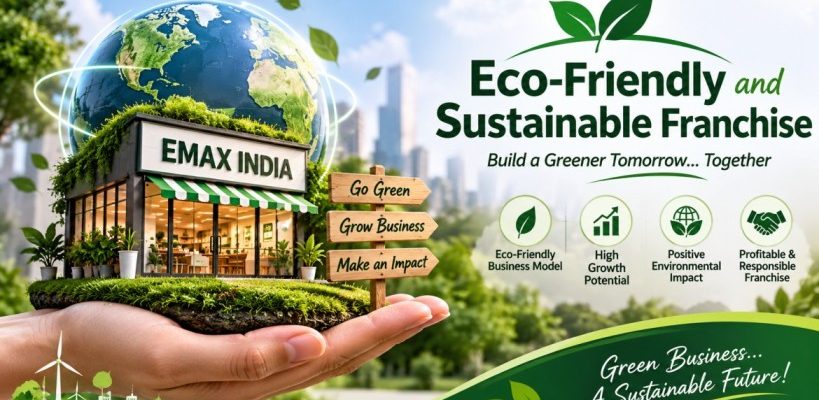
An eco-friendly franchise lets you run a business built on solar, EV, organic produce, recycling or green products under an established brand. In 2027, green franchises are among the fastest-growing categories for Indian entrepreneurs with ₹2 lakh–₹25 lakh budgets.
What Is an Eco-Friendly Franchise?
A sustainable franchise is a licensed business model where the core product or service reduces environmental impact — clean energy, waste reduction, organic food, or eco-friendly goods. You pay a franchise fee and get brand support, training and supply.
Why green businesses are growing in India
India has committed to 500 GW of non-fossil energy capacity by 2030 (MNRE, Government of India). Schemes like FAME (for EVs) and Swachh Bharat Mission (for waste) create steady demand for franchise-grade green services.
Why this matters to you: Government tailwinds mean you are not fighting to create demand — you are riding it.
Top 6 Sustainable Franchise Ideas for 2027
Solar, EV, organic, waste and more
- Solar panel installation franchise — rooftop solar is booming under the PM Surya Ghar scheme (2024).
- EV charging station franchise — public chargers are scarce; demand is rising fast (FAME II).
- Organic food and grocery franchise — organic food demand is growing at double digits (IBEF, 2024).
- Waste management and recycling franchise — supported by Swachh Bharat and EPR rules (CPCB).
- Eco-friendly cleaning services franchise — green cleaning products for homes and offices.
- Bamboo / eco-product retail franchise — sustainable home goods and packaging.
Why this matters to you: Picking the right sub-category matters more than the brand — solar and EV currently have the strongest tailwinds.
How Much Does a Green Business Franchise Cost?
Setup ranges from about ₹2 lakh (small eco-product retail in a Tier-3 city) to ₹25 lakh (EV charging hub or mid-size solar franchise in a metro).
Investment by category and city tier
| Franchise Type | Tier-3 (e.g., Patna) | Tier-2 (e.g., Indore, Jaipur) | Tier-1 (e.g., Mumbai) |
|---|---|---|---|
| Solar installation | ₹2L–₹4L | ₹5L–₹10L | ₹10L–₹20L |
| EV charging (2–4 points) | ₹3L–₹6L | ₹6L–₹12L | ₹12L–₹25L |
| Organic food retail | ₹4L–₹8L | ₹8L–₹15L | ₹15L–₹25L |
| Waste recycling unit | ₹3L–₹6L | ₹6L–₹12L | ₹10L–₹20L |
| Eco-cleaning service | ₹2L–₹3L | ₹3L–₹6L | ₹6L–₹10L |
| Bamboo/eco retail | ₹2L–₹4L | ₹4L–₹8L | ₹8L–₹15L |
Figures are industry estimates; brand fees vary widely.
Why this matters to you: Solar and cleaning services let you start at the lower end of your budget and scale as you win customers.
Solar Panel Franchise: A Closer Look
A solar franchise handles rooftop surveys, installation and after-sales service for residential and small commercial clients. You earn per-project margins plus recurring AMC income.
Why solar is India’s hottest green franchise
PM Surya Ghar: Muft Bijli Yojana (launched 2024) subsidises residential rooftop solar, triggering mass demand in Tier-2 and Tier-3 cities. Franchisees who can install and service reliably are in short supply.
Why this matters to you: Subsidy-driven demand means customers come pre-motivated — you mainly need execution capability.
EV Charging Station Franchise in 2027
EV charger franchises set up and operate charging points at malls, offices and highways. Revenue comes from per-kWh fees plus brand tie-ups.
Setup cost and earning model
- Slow AC charger: ₹50,000–₹1.5L per point
- Fast DC charger: ₹5L–₹15L per point
- Revenue: ₹8–₹20 per kWh (industry estimate)
- Payback: 18–36 months depending on utilization
Why this matters to you: Fast DC chargers are capital-heavy — start with 2–3 slow chargers in a Tier-2 city and expand as utilization rises.
Organic Food and Eco-Product Franchises
Organic grocery and eco-product retail franchises sell certified organic produce, green home goods and sustainable packaging. Margins are higher than conventional retail (industry estimate: 25–35% gross).
Why this matters to you: Urban buyers in Mumbai, Jaipur and Indore are willing to pay a premium for certified organic — but supply-chain reliability is the make-or-break factor.
Waste Management and Recycling Franchises
These franchises collect, sort and recycle dry waste, e-waste or plastic. Backed by Swachh Bharat Mission and EPR (Extended Producer Responsibility) rules, they enjoy steady B2B contracts with housing societies and offices.
Why this matters to you: Recurring B2B contracts give predictable monthly revenue, unlike one-time retail sales.
Franchise vs Own Green Business
| Factor | Eco-Friendly Franchise | Own Green Business |
|---|---|---|
| Startup cost | Medium (fees + setup) | Lower (no fee) |
| Brand trust | High (established name) | Build from scratch |
| Training & supply chain | Included | Self-sourced |
| Compliance support | Often guided by brand | Your responsibility |
| Best for | First-time owners | Experienced operators |
Why this matters to you: Green franchises carry compliance weight (subsidy paperwork, EPR, RERA-like registrations) — a brand that handles it for you is worth the fee.
Step-by-Step: How to Start in 2027
- Choose a sub-category based on local demand (solar in sunny states, EV in metros, recycling in dense cities).
- Shortlist 2–3 franchise brands and compare fee, margin and territory rights.
- Verify government empanelment (e.g., MNRE for solar, FAME-linked for EV).
- Review the franchise agreement with a lawyer.
- Register your firm and apply for GST if applicable.
- Set up office, tools and field team.
- Complete brand training and certification.
- Launch local Google Business Profile and WhatsApp campaigns.
Documents and compliance checklist
- ☐ Franchise agreement (legal review)
- ☐ Firm registration (proprietorship / LLP / Pvt Ltd)
- ☐ GST registration (if turnover crosses threshold)
- ☐ Udyam (MSME) registration — for subsidy eligibility
- ☐ PAN, current account, KYC
- ☐ State-specific empanelment (e.g., DISCOM for solar, state EV policy for chargers)
- ☐ CPCB / SPCB clearance for waste handling
- ☐ Insurance for field staff and equipment
Why this matters to you: Udyam registration often unlocks MSME and green-subsidy benefits that cut your payback period by months.
Best Cities for a Sustainable Franchise
Mumbai, Indore, Patna and Jaipur compared
- Mumbai: High demand for EV charging and organic retail. High cost, high competition.
- Indore: India’s cleanest city brand; strong civic support for waste and solar franchises.
- Patna: Low setup cost, rising rooftop solar demand, low organised competition.
- Jaipur: Strong solar irradiance and growing organic retail — great for both categories.
Why this matters to you: Tier-2 cities like Indore and Jaipur give you policy support and lower rent without sacrificing demand.
Is a Green Franchise Profitable? ROI Explained
| Metric | Solar (Tier-2) | EV Charging (Tier-2) | Eco-Retail (Tier-2) |
|---|---|---|---|
| Setup cost (est.) | ₹7L | ₹9L | ₹6L |
| Monthly revenue (est.) | ₹1.5L–₹2.5L | ₹80K–₹1.5L | ₹2L–₹3.5L |
| Gross margin | 25–35% | 30–40% | 25–35% |
| Payback (est.) | 12–18 months | 18–30 months | 10–15 months |
Figures are industry estimates; actual results vary by brand, city and execution.
Why this matters to you: Solar and eco-retail have the fastest paybacks; EV chargers earn steadily but slower — plan cash flow accordingly.