


Organic and Health Food Retail Franchise in India 2027
November 18, 2026
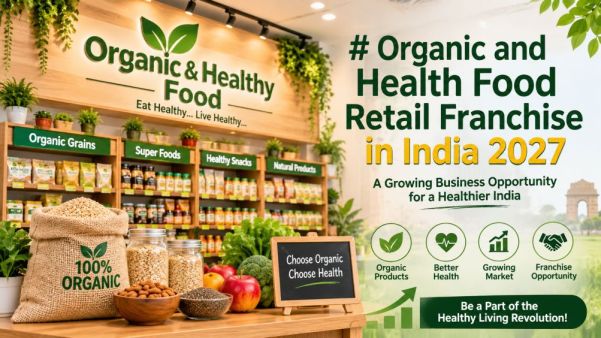
Organic and Health Food Retail Franchise in India 2027: Cost, ROI & Growing Trend
An organic and health food retail franchise is a branded store selling organic groceries, millet-based products, superfoods, and health supplements. In 2027, it is one of India’s fastest-growing retail categories because health-conscious buying is moving from metros to Tier-2 and Tier-3 cities.
India’s organic food market is estimated to grow at 15–20% CAGR through 2027 (industry estimate, based on APEDA organic export and domestic consumption data). That growth is pushing brands to expand through franchise partners in Indore, Jaipur, Patna, and Nashik.
What Is an Organic and Health Food Retail Franchise?
A health food franchise lets you open a branded store selling organic staples, cold-pressed oils, millets, herbal products, and supplements. You get the brand name, vetted supplier network, certification support, and often the billing and inventory system.
You invest the capital. The brand gives you product credibility. You earn from high-margin wellness products.
Why Health Food Retail Is Growing in India in 2027
Three demand shifts are driving this category:
- Post-pandemic health awareness — consumers actively seek immunity-boosting and chemical-free food (industry estimate from FMCG retail reports).
- Millet push by government — International Year of Millets (2023) created lasting demand; brands now stock millet flour, snacks, and ready mixes (source: APEDA).
- Tier-2/3 awareness — what was a Mumbai/Bengaluru trend in 2020 is now visible in Indore, Jaipur, and Patna (industry estimate from franchise expo data).
Why this matters to you: Early franchise partners in Tier-2/3 cities face less competition and get better territory protection than metro latecomers.
Organic Store vs Health Food Store vs Superfood Kiosk — Key Difference
| Model | Space Needed | Investment Range | Best For |
|---|---|---|---|
| Superfood Kiosk | 50–150 sq ft | ₹2L–₹5L | Malls, hospitals, Tier-3 markets |
| Health Food Store | 300–500 sq ft | ₹6L–₹15L | Tier-2/3 high streets |
| Full Organic Supermarket | 800–1,500 sq ft | ₹18L–₹25L+ | Metro suburbs, Tier-1 cities |
Why this matters to you: If your budget is ₹2L–₹5L, a superfood kiosk lets you test demand without locking into high rent. Upgrade to a full store once footfall is proven.
Organic and Health Food Franchise Investment in India 2027 (₹2L–₹25L)
Investment depends on city tier, store size, product range, and whether the brand provides initial stock on credit or you buy inventory upfront.
Low-Investment Health Food Franchise Options (₹2L–₹8L)
These are usually kiosk or small-counter models. Best for first-time entrepreneurs in Patna, Indore, and Tier-3 towns.
| Investment Range | What It Typically Covers | Best For | City Type |
|---|---|---|---|
| ₹2L–₹4L | Brand name, kiosk setup, initial stock (limited SKUs) | 50–100 sq ft kiosk | Tier-3 |
| ₹4L–₹8L | Above + signage, shelving, basic marketing | 150–300 sq ft counter | Tier-2/3 |
| ₹8L–₹15L | Full store setup, wider SKU range, staff training | 300–500 sq ft store | Tier-2 |
| ₹15L–₹25L | Turnkey outlet, high-street location, full inventory | 600–1,000 sq ft, metro suburbs | Tier-1/2 |
Mid & High-Investment Options (₹10L–₹25L)
These are full turnkey health food stores, often in Mumbai, Pune, or Jaipur suburbs. They include interiors, refrigeration, POS systems, and territory managers.
Hidden Costs Most Franchise Portals Skip
- FSSAI license fee: ₹2,000–₹7,500/year depending on category (source: FSSAI official fee schedule)
- Organic certification support (if applicable): ₹15,000–₹40,000 one-time (source: APEDA / Jaivik Bharat guidelines)
- Royalty: 3–6% of monthly sales (varies by brand)
- Refrigeration / cold storage: ₹30,000–₹70,000 one-time (for cold-pressed oils, dairy-free products)
- Shop & Establishment registration: ₹1,000–₹5,000 one-time (state-dependent)
Why this matters to you: A ₹6L health food franchise can quietly become an ₹8.5L project if you ignore certification and refrigeration costs. Keep a 15–20% buffer.
Health Food Franchise ROI & Profit Margin in 2027
Health food retail margins in India range from 25–40% depending on product mix. Superfoods, cold-pressed oils, and supplements carry higher margins than organic staples like flour and rice.
Monthly Revenue Model (Tier-2 City Example)
| Item | Estimated Amount (₹) |
|---|---|
| Daily sales (average) | ₹7,000–₹12,000 |
| Monthly sales | ₹2,10,000–₹3,60,000 |
| Gross margin (30%) | ₹63,000–₹1,08,000 |
| Rent | ₹12,000–₹22,000 |
| Staff salaries (2 people) | ₹16,000–₹26,000 |
| Royalty (4%) | ₹8,400–₹14,400 |
| Utilities, cold storage & packaging | ₹8,000–₹14,000 |
| Net profit (approx.) | ₹18,600–₹31,600/month |
Note: These are estimated figures based on industry benchmarks. Actual numbers depend on location, footfall, and product mix.
Break-Even Timeline — Realistic Expectations
Most health food franchises break even in 18–30 months (industry estimate). Kiosk models often break even faster (12–20 months) because of lower rent and setup cost. Full stores in metros may take 24–36 months.
Why this matters to you: Health food is a trust-driven category — customers take time to become repeat buyers. Plan your cash flow for at least 24 months.
Licenses & Certifications for Organic and Health Food Franchise
You cannot legally sell food products without an FSSAI license. If you sell products labelled “organic,” additional certification rules apply.
FSSAI License — The Base Requirement
- Basic Registration — turnover up to ₹12 lakh; fee ₹100/year
- State License — turnover ₹12 lakh–₹20 crore; fee ₹2,000–₹5,000/year
- Central License — turnover above ₹20 crore or multi-state operations
- Apply on FoSCoS portal; processing time 15–30 days (source: FSSAI)
Organic Certification (India Organic, Jaivik Bharat) & GST
- Jaivik Bharat logo — mandatory for products sold as “organic” in India (source: FSSAI Jaivik Bharat order).
- India Organic (NPOP) certification — required if you claim organic status on packaged products (source: APEDA National Programme for Organic Production).
- GST: Mandatory if turnover crosses ₹40L (₹20L for special category states). Most franchises register from day one.
- Shop & Establishment: Required under state labour laws; apply within 30 days of opening.
Why this matters to you: Selling products as “organic” without Jaivik Bharat or NPOP certification is a legal risk. Verify the brand’s certification chain before signing.
Top Organic and Health Food Franchise Categories in India 2027
The organized health food space in India has multiple franchise models. (This section is for research — always verify current franchise terms directly with brands.)
- Full organic supermarkets — typically ₹18L–₹25L+ investment, full support, metro and Tier-1 focus.
- Mid-tier health food stores — ₹8L–₹15L, Tier-2 focus, good stock credit, wider SKU range.
- Superfood kiosks — ₹2L–₹5L, mall and hospital locations, low setup, high-margin products.
- Millet & wellness product distributorship — ₹3L–₹8L, high-volume model with brand support.
How to Compare Brands Before Signing
- Ask for the Franchise Disclosure Document (FDD) — if they don’t have one, walk away.
- Visit 2–3 existing franchise outlets without the brand’s salesperson present.
- Ask current franchisees: “What’s your actual monthly profit after royalty, rent, and cold storage costs?”
- Check territory protection clause — can they open another outlet 500m away?
- Verify organic certification — ask for Jaivik Bharat / NPOP proof for products sold.
- Read the exit clause carefully — what happens if you want to leave after 2 years?
Why this matters to you: The brand’s sales team will show best-case numbers. Existing franchisees will show real numbers — especially on stock expiry and slow-moving SKUs.
Step-by-Step: How to Start a Health Food Retail Franchise
- Decide your budget & city — ₹2L–₹8L works for kiosks in Tier-3; ₹10L+ needed for Tier-1/2 stores.
- Shortlist 3 franchise brands — compare investment, royalty, territory, certification, and stock credit.
- Talk to existing franchisees — ask about profit, support quality, and stock expiry issues.
- Secure a high-footfall location — near residential clusters, gyms, hospitals, or organic markets.
- Apply for FSSAI license — on FoSCoS portal; choose Basic or State based on turnover.
- Verify organic certification — check Jaivik Bharat / NPOP compliance of the brand’s products.
- Sign the franchise agreement — get a lawyer to review territory, royalty, and exit clauses.
- Set up store — shelving, cold storage, billing software, initial inventory.
- Launch & market — local WhatsApp groups, Google Business Profile, nutritionist tie-ups, sampling.
Pre-Launch Checklist
- ☐ FSSAI license application submitted
- ☐ GST registration done
- ☐ Shop & Establishment registration filed
- ☐ Organic certification verified (Jaivik Bharat / NPOP)
- ☐ Franchise agreement reviewed by lawyer
- ☐ Cold storage / refrigeration installed & tested
- ☐ Billing software training completed
- ☐ Google Business Profile created
- ☐ Initial stock order placed with brand
- ☐ Staff trained on product knowledge & expiry management
Why this matters to you: 65% of delays happen at FSSAI and organic certification verification stage (industry estimate). Start those checks first.
Common Mistakes New Health Food Franchise Owners Make
- Choosing brand over location — a good residential cluster with a mid-tier brand beats a premium brand in a low-traffic mall.
- Ignoring stock expiry — health foods have shorter shelf life; unsold stock kills margins.
- Not verifying organic claims — selling uncertified “organic” products invites legal action and brand damage.
- Under-budgeting cold storage — cold-pressed oils and perishables need proper refrigeration from day one.
- Signing without FDD — no disclosure document means no legal protection.
Why this matters to you: Each of these mistakes costs ₹40,000–₹1.5L to fix. Avoid them before you sign.
Why This Matters to You — Final Take
An organic and health food retail franchise in India 2027 is a trust-driven, high-margin business — if you pick the right location, verify certifications, and manage stock expiry. The ₹5L–₹10L range works best for first-timers in Tier-2/3 cities.
Don’t rush. Compare 3 brands. Talk to real franchisees. Verify organic certification. Budget 20% extra. Then sign.
FAQ: Organic and Health Food Retail Franchise in India
1. How much does an organic food franchise cost in India in 2027?
Investment ranges from ₹2 lakh (superfood kiosk models) to ₹25 lakh+ (full organic supermarkets). Most Tier-2/3 first-timers invest ₹5L–₹10L. Add 15–20% buffer for FSSAI, organic certification, cold storage, and initial stock. (Estimated range based on franchise portal data.)
2. Is a health food store franchise profitable in India?
Yes, with the right location and product mix. Gross margins are 25–40%. After rent, staff, royalty (3–6%), and utilities, net profit is typically 8–12% of sales. A store doing ₹3L/month sales may net ₹18,000–₹32,000/month. (Industry estimate.)
3. What licenses are needed for an organic food franchise?
You need FSSAI license (Basic or State), GST registration, and Shop & Establishment registration. If selling products labelled “organic,” Jaivik Bharat or NPOP certification is mandatory. Apply on FoSCoS; FSSAI processing takes 15–30 days. (Source: FSSAI, APEDA.)
4. How long does it take to break even on a health food franchise?
Most kiosk models break even in 12–20 months. Full stores take 18–30 months. Metro outlets may take 24–36 months due to higher rent. (Industry estimate based on franchise operator feedback.)
5. Is organic food retail a growing trend in India in 2027?
Yes. India’s organic food market is estimated to grow at 15–20% CAGR through 2027, driven by health awareness, millet promotion, and Tier-2/3 demand. (Industry estimate, based on APEDA organic data and FMCG retail reports.)
6. Can I open a health food franchise without food business experience?
Yes. Most franchise brands provide training on product knowledge, hygiene, stock rotation, billing, and display. But you must comply with FSSAI norms and verify organic certification of products. No prior food experience is mandatory.