

Momo & Vada Pav Stall Franchise in India: Low-Cost, High-Return (2026)
November 5, 2026
Momo & Vada Pav Stall Franchise in India: Low-Cost, High-Return (2026)
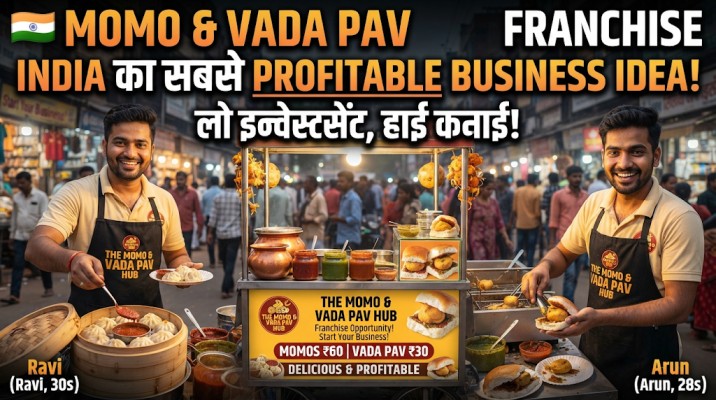
A momo or vada pav stall franchise in India can be started with ₹89,000 for a momo cart, or ₹2–5 lakh for a vada pav kiosk or small outlet. Gross margins run 50–65%, and break-even typically takes 6–15 months depending on the model, location, and daily footfall.
India’s momo market is estimated at over ₹30,000 crore, with more than 90% still unorganised. The vada pav economy in Mumbai alone is worth ₹1,500 crore, with vendors selling 500–600 pieces daily. These are not niche products — they are daily habits. This guide gives you the real costs, margins, and brand options for the lowest-capital entry into street food franchising.
One-Line Answer: What Does ₹1–5 Lakh Actually Buy?
Momo cart / kiosk: ₹89,000–₹3 lakh for a branded cart with equipment, training, and launch support. No dine-in space, minimal staff. Break-even in 6–12 months.
Vada pav kiosk / small outlet: ₹2–5 lakh for a 150–300 sq ft outlet with equipment, branding, and initial stock. Break-even in 12–24 months.
Multi-snack stall: ₹4–8 lakh for a cart or kiosk offering momos, vada pav, and other snacks. Higher revenue potential, slightly longer break-even.
Why this matters to you: The ₹1 lakh budget is the realistic entry point for a momo cart. The ₹5 lakh budget opens up a vada pav kiosk or a multi-snack stall. Choose the model before you choose the brand.
Why Momo and Vada Pav Are India’s Most Capital-Efficient Food Franchises
The ₹30,000 Crore Momo Market
India’s momo market is estimated at over ₹30,000 crore annually, but more than 90% of that business is still unorganised — served by small kiosks, roadside vendors, and informal operators. The organised segment is estimated at only around ₹3,000 crore. That gap is the franchise opportunity: organised brands bringing consistency, hygiene, and supply-chain reliability to a market that already has massive demand.
The ₹1,500 Crore Vada Pav Economy
Mumbai’s vada pav economy alone is worth over ₹1,500 crore. Vendors sell 500–600 pieces daily**, with profit margins often exceeding **50%. A single street vendor can earn ₹2–2.9 lakh per year** in profit, and in prime areas, monthly earnings can reach ₹2.4 lakh. The product costs around ₹6 to make and sells for ₹15–25, leaving a gross margin of ₹9–19 per unit.
90% Unorganised = The Franchise Opportunity
Both categories are dominated by unorganised vendors. A franchise brings brand recall, standardised recipes, hygiene protocols, and supply-chain support — the exact things that let a stall compete on trust rather than just price. For a first-time entrepreneur, that brand support is the difference between a stall that survives and one that scales.
The ROI Advantage: 80–135% Annual Returns
Industry ROI comparisons show momo franchises delivering around 80% annual ROI** on a ₹6 lakh investment, with **15-month break-even. Vada pav kiosks in the ₹2–5 lakh band can break even in 18–24 months**. Compared to full cafés or QSRs that need ₹15–35 lakh and 21–36 months to break even, the stall model is dramatically more capital-efficient.
Why this matters to you: The stall model wins on ROI percentage, not absolute profit. A ₹6 lakh momo stall earning ₹40,000/month delivers an 80% annual return. A ₹35 lakh vada pav outlet earning ₹50,000/month delivers a much lower percentage return. If capital efficiency matters, the stall is the smarter first move.
The Three Stall Franchise Models Compared
Momo Cart / Kiosk (₹89,000–₹3 Lakh)
A branded momo cart or small kiosk with a steamer, prep area, and branding. No seating, minimal staff (1–2 people). Best for high-footfall locations like college gates, markets, and metro stations. Momorita offers a street-based momo cart at ₹89,000 with an assured monthly earning potential of around ₹30,000. Arre Momo offers cart formats starting at ₹1.1 lakh** and full cart setups at **₹2.5 lakh.
Vada Pav Kiosk / Small Outlet (₹2–5 Lakh)
A 150–300 sq ft kiosk or small outlet with a frying station, prep counter, and branding. Requires 2–4 staff. Best for urban streets, commercial hubs, and food courts. Mr. Vadewala offers a ₹2–5 lakh franchise with a ₹50,000 fee and 150–200 sq ft requirement. Dhamaka Vada Pav offers a ₹2–5 lakh franchise with a ₹1 lakh fee and 250–300 sq ft requirement.
Multi-Snack Stall (₹4–8 Lakh)
A larger cart or kiosk offering momos, vada pav, and other snacks ( burgers, fries, beverages). Higher revenue per square foot, but more equipment and staff. Best for locations with all-day footfall. Arre Foods’ express partner format with a full chaat + momo menu runs ₹8–12 lakh.
Comparison Table: Investment, Margin, Break-Even
| Model | Investment | Gross Margin | Break-Even | Best For |
|---|---|---|---|---|
| Momo Cart / Kiosk | ₹89,000–₹3 lakh | 50–60% | 6–12 months | First-timers, high-footfall spots |
| Vada Pav Kiosk / Outlet | ₹2–5 lakh | 50–65% | 12–24 months | Urban streets, commercial hubs |
| Multi-Snack Stall | ₹4–8 lakh | 45–55% | 12–18 months | All-day footfall, broader menu |
Sources: Momorita (Feb 2026), Arre Foods (2026), Mr. Vadewala / ForeFind (Jun 2026), Dhamaka Vada Pav / ForeFind (Jun 2026). Figures are estimates and vary by brand, city, and location.
The Real Investment: Where Your Money Goes
Franchise Fee, Cart/Equipment, Stock, Licences, Working Capital
| Cost Component | Momo Cart (₹) | Vada Pav Kiosk (₹) |
|---|---|---|
| Franchise fee | ₹30,000–₹1,00,000 | ₹50,000–₹1,00,000 |
| Cart / equipment | ₹40,000–₹1,00,000 | ₹75,000–₹1,50,000 |
| Initial stock | ₹10,000–₹20,000 | ₹20,000–₹40,000 |
| Security deposit | ₹10,000–₹20,000 | ₹20,000–₹50,000 |
| Licences (FSSAI, GST, trade) | ₹5,000–₹10,000 | ₹5,000–₹15,000 |
| Working capital (2 months) | ₹10,000–₹20,000 | ₹20,000–₹40,000 |
| Total | ₹89,000–₹3,00,000 | ₹2,00,000–₹5,00,000 |
Sources: Momorita (2026), Mr. Vadewala (Jun 2026), Dhamaka Vada Pav (Jun 2026), Arre Foods (2026). Figures are estimates and vary by brand, city, and inclusions.
Why this matters to you: The ₹89,000 momo cart is not a full business — it is a starter kit. The ₹2–5 lakh vada pav kiosk is a more complete setup with space, staff, and a broader menu. Budget for the all-in number, not the headline fee.
Profit Margins and Break-Even: Real Numbers
50–60% Gross Margin on Momos
Momo carts typically run at 50–60% gross margins. Arre Momo reports plates starting at ₹22 and selling at ₹65+, with substantial margins on every order. The low raw material cost (flour, vegetables, minimal protein) and high perceived value of a hot, branded snack keep the margin strong.
50–65% Gross Margin on Vada Pav
Vada pav unit economics are equally attractive. The product can be built for around ₹6 and sells for ₹15–25, giving a gross margin of ₹9–19 per unit — often exceeding 50–65%**. Vendors selling 500–600 pieces daily generate steady daily cash flow, and in prime locations, monthly earnings can reach ₹2.4 lakh.
Daily Sales and Monthly Profit Scenarios
| Scenario | Daily Units | Monthly Revenue (Est.) | Monthly Net Profit (Est.) |
|---|---|---|---|
| Momo cart, moderate footfall | 100–150 plates | ₹60,000–₹1,00,000 | ₹20,000–₹35,000 |
| Momo cart, high footfall | 200–300 plates | ₹1,20,000–₹2,00,000 | ₹40,000–₹60,000 |
| Vada pav kiosk, stable | 300–500 pieces | ₹1,50,000–₹2,50,000 | ₹35,000–₹60,000 |
Sources: Momorita (2026), Arre Momo (2026), Vada Pav industry estimates (2026). Figures are estimates and vary by location, pricing, and operating efficiency.
Break-Even in 6–15 Months
Momo carts can break even in 6–12 months**; vada pav kiosks typically take **12–24 months**. Industry ROI comparisons place momo franchises at around 15-month break-even on a ₹6 lakh investment. The variance is driven almost entirely by location footfall and daily unit sales.
Why this matters to you: A momo cart in a college zone can break even in 6 months. A vada pav kiosk in a secondary market may take 18 months. Location is the single biggest variable.
Top Momo & Vada Pav Franchise Brands Under ₹5 Lakh (2026)
Momorita (₹89,000 Cart)
A South India-based street-first momo brand offering a cart franchise at ₹89,000** with an assured monthly earning potential of around **₹30,000**. The model includes supply chain support, menu standardisation, and branding. Best for first-time entrepreneurs and small business owners.
Arre Momo (₹1.1–2.5 Lakh)
Cart formats starting at ₹1.1 lakh**, with full cart setups at **₹2.5 lakh including recipes, training, and launch support. Plates start at ₹22 and sell at ₹65+, giving strong per-unit margins.
Mr. Vadewala (₹2–5 Lakh)
A vada pav-focused QSR franchise with a ₹50,000 franchise fee** and **150–200 sq ft** space requirement. Payback in 1–2 years. 100–200 outlets. Best for compact kiosks and snack bars in high-footfall areas.
Dhamaka Vada Pav (₹2–5 Lakh)
An established brand (founded 2010) with a franchise fee of ₹1 lakh** and **250–300 sq ft** requirement. Payback in 18–24 months. Best for urban streets, commercial hubs, and food courts.
Brand Comparison Table
| Brand | Investment | Model | Break-Even | Best For |
|---|---|---|---|---|
| Momorita | ₹89,000 | Momo cart | 6–12 months | Lowest entry, first-timers |
| Arre Momo | ₹1.1–2.5 lakh | Cart / kiosk | 10–14 months | Branded cart, strong margins |
| Mr. Vadewala | ₹2–5 lakh | Vada pav kiosk | 12–24 months | Compact outlet, low fee |
| Dhamaka Vada Pav | ₹2–5 lakh | Vada pav outlet | 18–24 months | Established brand, urban locations |
Sources: Momorita / Dailyhunt (Feb 2026), Arre Foods (2026), ForeFind (Jun 2026). Figures are estimates and vary by city and agreement.
Stall vs Café: Which Model Wins on ROI?
Investment, Space, Staff, and Break-Even Comparison
| Factor | Momo/Vada Pav Stall | Full Café |
|---|---|---|
| Investment | ₹89,000–₹5 lakh | ₹15–35 lakh |
| Space required | 50–300 sq ft | 600–1,500 sq ft |
| Staff required | 1–4 | 6–15 |
| Break-even | 6–24 months | 21–36 months |
| Annual ROI | 80–135% | 50–60% |
| Risk level | Low | Medium–high |
Why the Stall Wins for First-Timers
The stall model requires less capital, less space, fewer staff, and breaks even faster. It delivers a higher percentage ROI because the investment base is so low. A ₹6 lakh momo stall can recover the investment in 15 months and deliver 80% annual ROI. A ₹35 lakh café takes 21–36 months to break even and delivers 50–60% annual ROI. If capital efficiency matters more than absolute monthly profit, the stall is the smarter first move.
Why this matters to you: With a ₹5 lakh budget, the stall is the only realistic entry. The café is a ₹15 lakh+ decision. Start with the stall, learn the business, then scale.
Tier-2 City Advantage: Why Indore, Jaipur, and Patna Work
Lower Rent, Lower Competition, High Footfall
A 100–200 sq ft stall space in a Tier-2 city costs ₹8,000–₹20,000 per month**, versus ₹30,000–₹60,000+ in a metro. Competition from organised momo and vada pav brands is lower, and demand is growing as young people seek affordable, branded street food. A momo cart in Indore or Jaipur can generate **₹60,000–₹1,00,000 in monthly revenue within 4–6 months if the location has steady footfall (college zone, market, bus stand). At a 50–60% gross margin, the owner can expect ₹20,000–₹35,000 in monthly net profit.
Why this matters to you: In Tier-2 cities, a ₹1–3 lakh momo cart can break even in 6–10 months because rent and staff costs are lower. The same investment in a metro buys more competition and higher fixed costs.
7-Point Checklist Before Choosing a Momo or Vada Pav Franchise
- Does the investment cover all-in costs, or only the franchise fee?
- Is the royalty a percentage of revenue, a flat monthly fee, or zero?
- Does the brand provide a cart/kiosk, or must I buy equipment separately?
- What is the minimum space requirement, and does it fit my target location?
- Have I budgeted ₹10,000–₹40,000 for working capital and 2 months of operating costs?
- Have I spoken to 3 existing franchisees about actual daily sales and monthly profit?
- Is the territory protected in writing?
If the answer to questions 1, 3, or 5 is unclear, do not sign yet.
Final Verdict
If your budget is ₹1–2 lakh: A momo cart (Momorita at ₹89,000, or Arre Momo at ₹1.1–2.5 lakh) is the realistic entry point. Focus on a college zone, market, or transit hub. Break-even in 6–12 months is achievable.
If your budget is ₹2–5 lakh: A vada pav kiosk (Mr. Vadewala or Dhamaka Vada Pav) offers a complete setup with space, staff, and a broader menu. Payback in 12–24 months.
If you want the highest ROI percentage: The stall model wins. A ₹6 lakh momo stall can deliver 80% annual ROI, compared to 50–60% for a ₹15–35 lakh café.
If you want the lowest-risk first business: Start with a momo cart. It is the cheapest way to learn the food business — menu, pricing, staffing, and daily operations — before committing to a larger outlet.
See verified momo and vada pav franchise options:
View franchise list on free-franchise.com →
Frequently Asked Questions (FAQ)
Can I start a momo or vada pav stall franchise with ₹1 lakh?
Yes. Momorita offers a momo cart franchise at ₹89,000 with an assured monthly earning potential of around ₹30,000. Arre Momo offers carts starting at ₹1.1 lakh. These are the lowest entry points in the street food franchise category.
What is the profit margin in a momo or vada pav stall?
Momo carts typically run at 50–60% gross margins. Vada pav outlets run at 50–65% gross margins — the product costs around ₹6 to make and sells for ₹15–25. After rent, staff, and raw material costs, a moderate-footfall stall can generate ₹20,000–₹35,000 in monthly net profit.
How long does it take to break even in a momo or vada pav franchise?
Momo carts break even in 6–12 months. Vada pav kiosks typically take 12–24 months. Industry ROI comparisons place momo franchises at around 15-month break-even on a ₹6 lakh investment. Location footfall is the biggest variable.
Is a momo or vada pav stall profitable in Tier-2 cities?
Yes. Tier-2 cities like Indore, Jaipur, and Patna have lower rent (₹8,000–₹20,000 for 100–200 sq ft), lower competition, and steady demand. A momo cart with 100–150 daily plates can generate ₹20,000–₹35,000 in monthly net profit and break even in 6–10 months.
What licences are required for a momo or vada pav stall in India?
You need FSSAI registration (₹100–₹5,000 per year depending on turnover), GST registration if turnover exceeds the threshold, shop and establishment registration, and local municipal permits. Total licensing cost is typically ₹5,000–₹15,000.
Why is the stall model better than a café for a first-time franchisee?
The stall model requires less capital (₹1–5 lakh vs ₹15–35 lakh), less space, fewer staff, and breaks even faster (6–24 months vs 21–36 months). It delivers a higher percentage ROI (80–135% vs 50–60%) because the investment base is lower. Start with a stall, learn the business, then scale.